
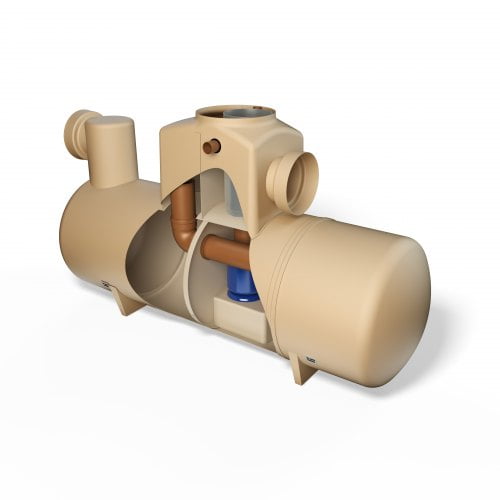
Do you know what oil separators are and why they are important for your business? If you are involved in any industry that deals with oily wastewater, such as food processing, car washing, you need to have an effective way of separating oil from water before discharging it to the sewer or the environment. Oil separators are devices that do exactly that: they remove oil and grease from wastewater and prevent them from polluting the water sources.
But not all oil separators are created equal. There are different types of oil separators available in the market. How do you know which type of oil separator is the most efficient for your specific needs and requirements? This blog post will compare and contrast the three main types of oil separators: gravity, coalescing, and hydrocyclone.
What are the Different Types of Oil Separators?
Oil separators can be classified into three main types based on the principle they use to separate oil from water: gravity, coalescing, and hydrocyclone. Let’s take a closer look at each type and how they work.
Gravity Oil Separators
Gravity oil separators are the simplest and oldest type of oil separators. They rely on the natural difference in density between oil and water to separate them. Gravity oil separators are usually large tanks or chambers that allow the wastewater to settle and separate into two layers: an upper layer of oil and a lower layer of water. The oil layer is then skimmed off and collected, while the water layer is drained out.
They are easy to operate and maintain, and they do not require any external power source. However, they also have some drawbacks. They are not very efficient at removing small oil droplets, which can remain suspended in the water. They also take up a lot of space and have a low flow rate, which means they can only handle a limited amount of wastewater.
Coalescing Oil Separators
They are a more advanced type of oil separators that use a special media to enhance the separation process. The media consists of plates, tubes, or fibres that have a high affinity for oil and a low affinity for water. When the wastewater passes through the media, the oil droplets stick to the media and coalesce (merge) into larger droplets, while the water droplets pass through.
The larger oil droplets then rise to the surface due to gravity and are skimmed off, while the water droplets exit the separator. They can reduce the oil concentration to less than 10 ppm (parts per million). They also have a higher flow rate and a smaller footprint, which means they can handle more wastewater in less space. However, they also have some disadvantages. They require a power source to operate and maintain the media, which can increase their operational costs.
Hydrocyclone Oil Separators
Hydrocyclone oil separators are the most modern and innovative type of oil separators that use centrifugal force to separate oil from water. A hydrocyclone is a cone-shaped device that has an inlet, an outlet, and an overflow. The wastewater enters the hydrocyclone through the inlet and is forced to spin at a high speed. This creates a vortex that generates a strong centrifugal force, which pushes the heavier water to the outer wall of the cone and the lighter oil to the inner core.
The water exits the hydrocyclone through the outlet, while the oil exits through the overflow. They can remove up to 99% of the oil from the wastewater, even if the oil droplets are very small or emulsified. They also have a very high flow rate and a very small footprint, which means they can handle a large amount of wastewater.
How to Choose the Best Oil Separator for Your Business?
As you can see, each type of oil separator has its own pros and cons, and there is no one-size-fits-all solution. The best oil separator for your business depends on several factors, such as:
The amount and quality of the wastewater you produce
One of the factors that affects your choice of oil separator is the amount and quality of the wastewater you produce. Different types of oil separators have different capacities and efficiencies, and they may not be suitable for all kinds of wastewater.
For example, if you produce a large amount of wastewater with a high oil concentration, you may need a hydrocyclone oil separator that can handle a high flow rate and remove up to 99% of the oil.
The oil concentration and characteristics in the wastewater
Another factor that influences your choice of oil separator is the oil concentration and characteristics in the wastewater. Different types of oil separators have different abilities to remove oil droplets of different sizes and states, and they may not be effective for all kinds of oil.
For example, if your wastewater contains small oil droplets or emulsified oil, you may need a coalescing oil separator that can enhance the separation process by using a special media.
The discharge standards and regulations you need to comply with
Another factor that determines your choice of oil separator is the discharge standards and regulations you need to comply with. Different types of oil separators have different levels of performance and quality, and they may not meet the requirements of the authorities and the environment.
For example, if you need to comply with strict discharge standards and regulations that limit the oil concentration in the wastewater to less than 10 ppm, you may need a coalescing oil separator that can achieve this level of reduction.
The space and budget you have available
Another factor that affects your choice of oil separator is the space and budget you have available. Different types of oil separators have different sizes and costs, and they may not fit your space and budget constraints.
For example, if you have a limited space and budget, you may need a hydrocyclone oil separator that is compact and economical, and does not require any media or power source.
The maintenance and operational costs you are willing to incur
Another factor that influences your choice of oil separator is the maintenance and operational costs you are willing to incur. Different types of oil separators have different needs and demands, and they may not suit your maintenance and operational preferences.
For example, if you want to minimise your maintenance and operational costs, you may need a hydrocyclone oil separator that does not require any cleaning or replacement, and operates on its own.
Conclusion
To sum up, choosing the right oil separator is crucial for businesses that handle oily wastewater, as it impacts both environmental compliance and operational efficiency. Gravity, coalescing, and hydrocyclone oil separators each offer distinct advantages and limitations, making it essential to consider factors like wastewater quantity and quality, regulatory requirements, available space, budget constraints, and operational costs when selecting the most suitable system.
Resolute Civils understands the complexities involved in this decision-making process. We are here to help you navigate these considerations, ensuring you select the most efficient oil separator tailored to your business needs. Reach out to Resolute Civils for expert guidance and solutions that align with your environmental and operational goals.
Frequently Asked Questions
What makes an oil separator efficient?
Efficiency in oil separators is determined by their ability to remove a high percentage of oil and contaminants from wastewater, their operational cost-effectiveness, and their adaptability to different environmental conditions and regulatory standards.
Which type of oil separator is best for high-flow applications?
Hydrocyclone oil separators are typically best for high-flow applications due to their compact design, which allows for efficient processing of large volumes of water without occupying much space.
Are gravity oil separators suitable for all types of industries?
Gravity oil separators are versatile and can be used across various industries; however, their efficiency might be lower for applications requiring the removal of very fine oil droplets or in high-flow scenarios.
Do hydrocyclone oil separators require a power source?
No, hydrocyclone oil separators generally do not require an external power source. They use the kinetic energy of the incoming fluid to create the separation effect, making them energy-efficient.
What are the maintenance requirements for coalescing oil separators?
Coalescing oil separators require regular maintenance to clean or replace the coalescing media and ensure optimal performance. The frequency of maintenance depends on the volume and quality of the processed wastewater.
How do I choose the right type of oil separator for my business?
Choosing the right oil separator involves assessing factors like the volume and quality of your wastewater, the specific oil types present, space constraints, budget considerations, and compliance with environmental regulations. Consulting with a specialist like Resolute Civils can provide tailored advice and solutions.